New study: Perdrial et al 2026 ‘Soil Pb risks associated with urbanization histories in Springfield MA and Hartford CT USA
(click to download)
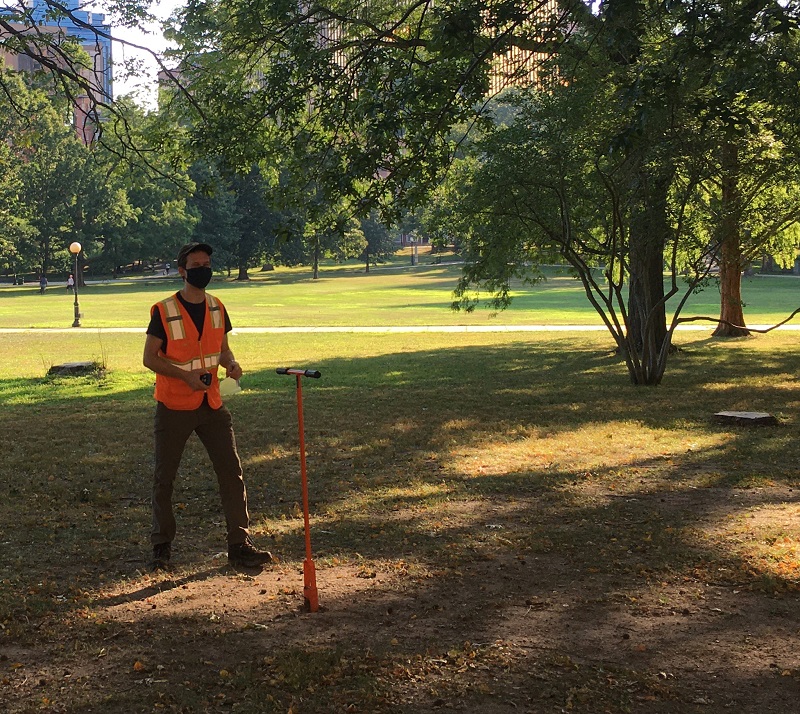
The original study was originally funded by the United States Department of Agriculture to evaluate portable X-Ray fluorescence(pXRF) to rapidly assess toxic elements and nutrient elements in urban soils. Our new study by Nico Perdrial, Meghan Cope, myself, Eric Sirkovich, and Sandy Walser used the data in a socioeconomic framework to see who is exposed to the lead.
At the time, I was an assistant professor at the University of Massachusetts Amherst and lived in Springfield, so this was my backyard to study, both literally and figuratively. Western Massachusetts and central Connecticut are largely forgotten by researchers due to the gravity of Boston and New York City metropolitan areas garnering the focus and money.
Lead is and important urban pollutant, it is everywhere but especially from lead paint, lead gasoline, and industrial activities. Lead causes permanent neurological damage to children, often changing their behavior to being less regulated, decreased ability to create or recall memories, and decreased cognitive capacity. Unfortunately, these effects may never to be regained due to long-term physiological damage to the brains synapse connections.
Our study showed that exposure to elevated soil lead (>200 mg/kg) was most prevalent in communities who live in multi‐family housing, had more children, and were populated by non‐Hispanic Whites.
This all suggests that historical discriminatory practices, including redlining, have anchored environmental injustices in the studied communities, creating an invisible legacy effects to today!
A previous study showed Hartford is top 5 cities in Connecticut with elevated blood level in children https://data.ct.gov/stories/s/Childhood-Lead-Poisoning-Surveillance-Top-5-Cities/vknk-v5pz/
Connecticut has recently aimed to monitor and reduce lead exposure to children (but funding was not enough) – see https://leadfreect.org/
Massachusetts has also aimed to monitor and reduce lead exposure to children but no funding was provided) – see https://www.mass.gov/orgs/childhood-lead-poisoning-prevention-programhttps://leadfreect.org/