At the University of Virginia, EVSC 4270 is the introduction to soil science course to get students the fundamentals of soil science. As part of the course, our field excursions are key to turn ‘book knowledge’ into practical application.
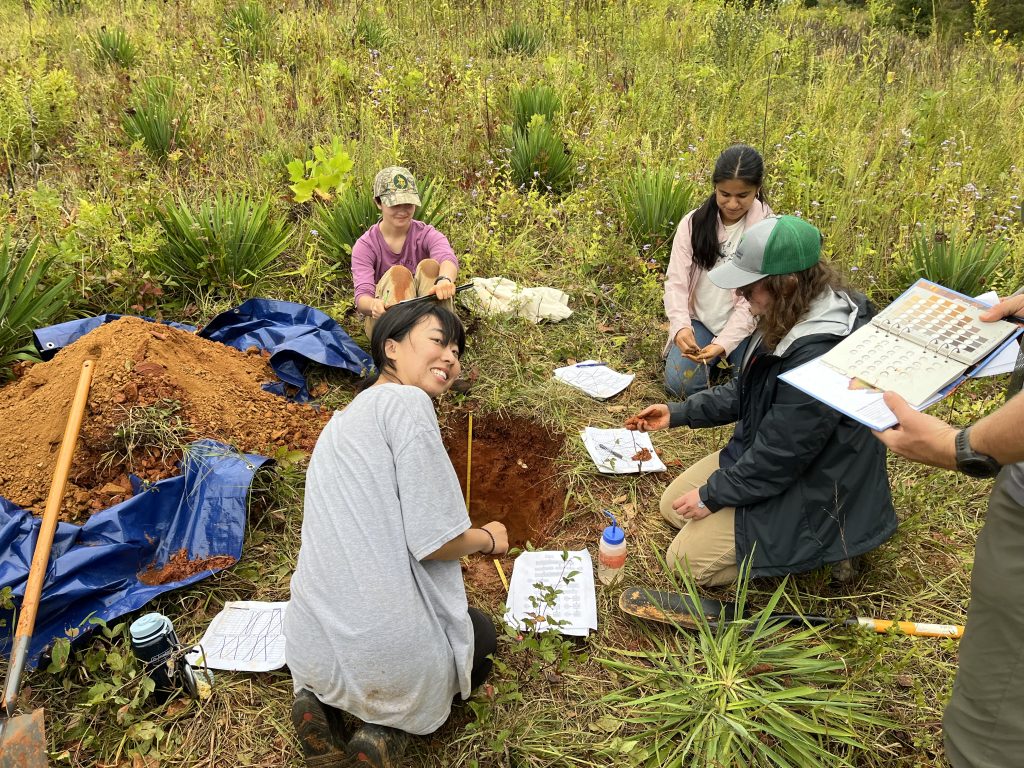
In our laboratory sections, we have focused on digging soil pits on the piedmont surrounding Charlottesville region. AT the University of Virginia’s sustainability lab at Morven, we excavated catenas to look at topographic variability on soils.
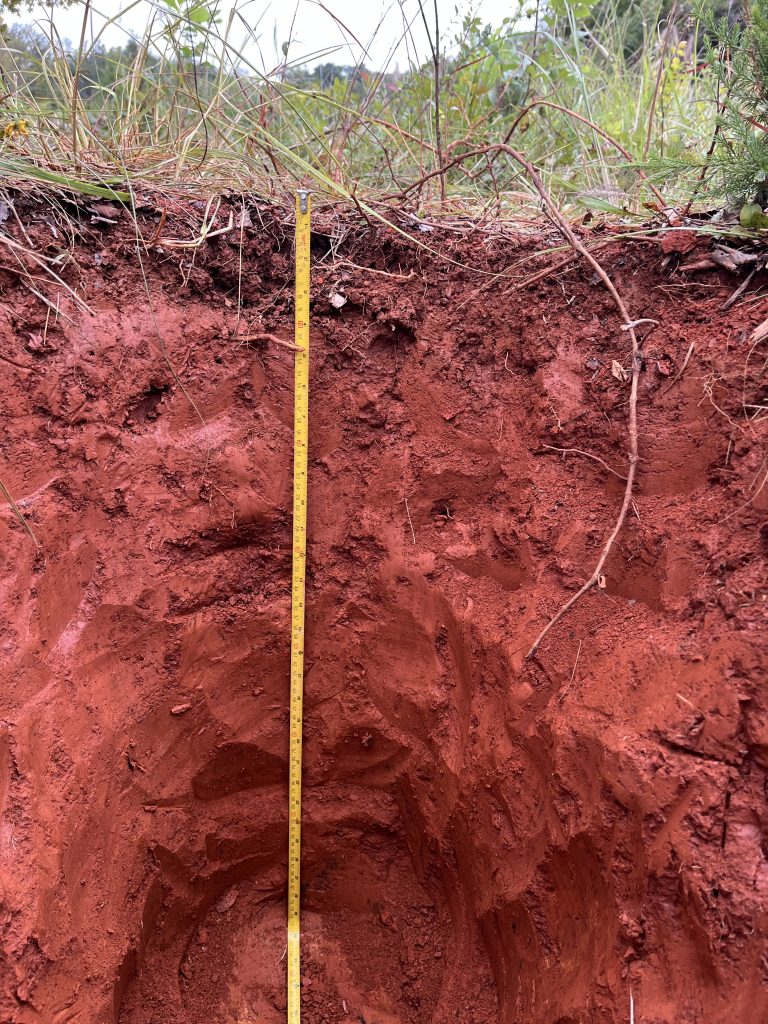
(Left) A rhodoudult on ridge top at Morven sustainability lab in Charlottesville Virginia, near Thomas Jefferson’s historic Monticello.
The soil shows some erosion as the A and E horizons are missing. At the surface, the top of the Bt horizon has begun converting to an A horizon. The rest of the 30″ of soil exposed are Bt horizons. The soils are deeply red from intensive weathering of meta-basalts that are the dominant bedrock of the Blue Ridge.
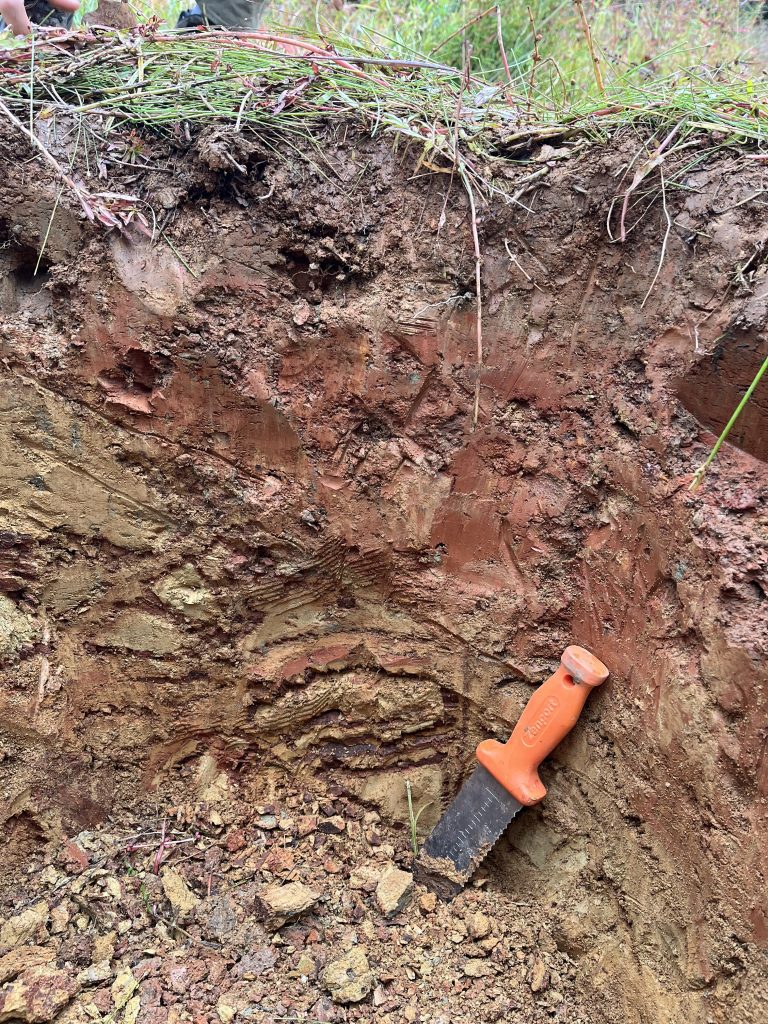
(Left bottom) A complicated kanhapludult also at the Morven Sustainability Lab in Charlottesville VA. The soil occurs on a flat area near a modern pond. Despite the soil pit being dug below the water level of the pond, the soil pit did not fill with water nor did it exhibit gleying. This soil is not directly connected with the lake hydrologically.
The plunging BC horizon at the bottom the soil pit has relic root channels filled in with Bt clays from above. The plunging Bt horizon shows the original topography of the soils, highlighting that the soil has been terraced by people, likely during the late 1700s early 1800s by enslaved people.
The formation of a new Ap ochric epipedon that is parallel with the modern surface highlights that the soil has undergone intensive agriculture with tillage.
The deep red is a Bt horizon from intensive weathering of the meta-basalt bedrock. Saprolite can be found in the top 50″ of the soil.